Draft for Publish0x • Language: English
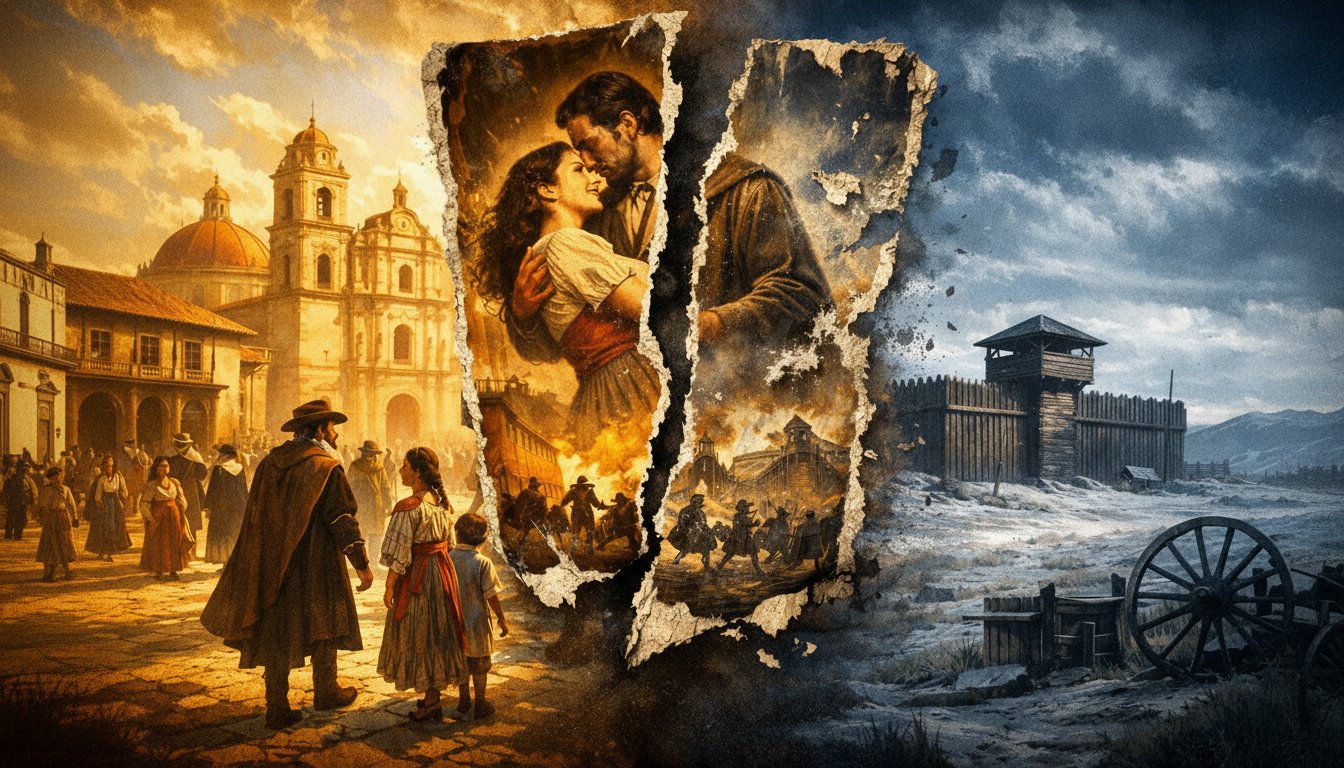
For decades, Hollywood trained the world to see one image: the Spaniard as a cruel, gold‑drunk villain in black armor, and the English (or French) as ‘civilized’ pioneers. It’s a powerful narrative—simple, emotional, cinematic. It’s also deeply selective.
This is not a request for applause, and it is not a plea for forgiveness. It is a demand for intellectual honesty: if we are going to judge the past, we must judge it with the same standard for everyone.
The ‘Hollywood Spaniard’ vs. the Real Colonial Record
Movies love clean moral roles. They need a villain, and Spain was convenient: Catholic, imperial, and already targeted by centuries of anti‑Spanish propaganda in Europe. But cinema is not history.
The popular myth says: Spain arrived, evangelized at swordpoint, and wiped out entire peoples out of pure greed. The reality is more complicated and far less flattering to the self‑image of the Anglo world.
Spain’s presence in the Americas produced brutal episodes—like every empire in history. But it also produced something that Hollywood rarely shows because it destroys the simplistic moral scoreboard: a vast mestizo civilization, cities, institutions, and a population that—unlike in much of Anglo North America—did not disappear.
The ‘Mestizaje Test’: Look at the People Who Exist Today
Here is the bluntest test of all. Look at Mexico, Peru, Bolivia, Ecuador, Guatemala, Paraguay: indigenous and mestizo populations are not a footnote—they are a living majority or a massive part of national identity.
Now look north. In the United States and large parts of Canada, indigenous peoples were pushed into reservations, shattered by disease, forced removals, and systematic dispossession. This is not ‘Spain good, England bad.’ It’s a basic observation: the demographic outcomes are radically different, and they reflect radically different colonial patterns.
When a society ends up mixed—culturally and biologically—it usually means interaction, integration, and yes, also conflict. When a society ends up with native populations largely erased from the mainstream, it points to a colder logic: remove or eliminate the obstacle to land.
‘They Came for Gold’: The Simplest Lie
Yes, the Spanish Crown extracted enormous wealth. Empires do that.
But the Hollywood version—Spain as nothing but a giant robbery—ignores what is still visible in stone across the Americas: cities, cathedrals, roads, universities, legal institutions, and complex administrations that were built and maintained for centuries.
You can dislike empire and still recognize that Spain did not operate like a temporary raiding party. It built a long‑term civil structure. And the proof is not ideological—it is architectural, institutional, and demographic.
Laws, Morality, and the Uncomfortable Fact of Early Debate
One of the most inconvenient facts for the Black Legend is that Spain produced internal moral and legal debate about the status and treatment of indigenous peoples unusually early for its time.
Spain developed legal frameworks that, on paper, recognized indigenous peoples as human beings with rights and moral status. Practice often failed—sometimes horribly—but the existence of legal and theological dispute matters because it reveals something that propaganda tries to bury: the Spanish imperial project was not presented merely as ‘empty the land and replace the people.’
In Anglo North America, the moral framing was frequently simpler: the land is there to be taken; the native is an obstacle; removal is destiny.
Universities vs. Frontier Myth
Anglo mythology celebrates ‘the frontier’—rugged individualism, the rifle, the cabin, the endless expansion.
Spanish America tells a different story: early urban life, administrations, and centers of learning. Universities were founded in the Spanish Americas in the 16th century. That doesn’t mean paradise. It means a different model: not a temporary march west, but an organized imperial civilization intended to last.
The Black Legend: Europe’s First Modern Propaganda Campaign
So why does the myth survive? Because it was useful.
Spain was the superpower of its time. Rival powers needed not only cannons and ships, but a moral weapon to justify attacking Spanish interests. Over time, anti‑Spanish narratives spread through pamphlets, sermons, political rhetoric—and eventually modern education and entertainment.
The result is a strange historical spectacle: nations that profited from slavery, dispossession, and racial hierarchy positioned themselves as moral judges of a rival empire, and then exported that judgment globally through language and culture.
A Modern Parallel: Who Writes the Moral Scoreboard?
It is worth asking who gets to write the moral scoreboard in the first place.
The Anglo world that so confidently lectures others about historical sins still wrestles publicly with the legacy of slavery and segregation. Unequal outcomes remain visible today—in wealth, health, and the justice system. This does not ‘absolve’ Spain, and it is not an attempt to change the subject. It is a reminder that moral posturing has often been selective: outrage is loudest when it is politically convenient.
The conquest of the Americas was not a fairy tale. It was violent, complex, tragic, and world‑changing.
But the cartoon version—Spain as uniquely evil while England and France were enlightened pioneers—is propaganda strengthened by centuries of repetition and modern entertainment.
If you want a mature view of history, you don’t need new saints and demons. You need the courage to look at outcomes, institutions, and facts—even when they damage the myths you grew up with.
And if someone demands that you apologize before you speak, the answer is simple:
The apology belongs to those who lied—then sold the lie as culture.